




COST, RISK, AND VALUE IN SERVICE DOG TRAINING SERIES
The cost of a service dog is frequently discussed in terms of price, yet price alone fails to capture the full scope of financial, ethical, and practical considerations involved. This series examines the true cost of service dog acquisition and training through the lenses of ownership responsibility, training structure, long-term care, and risk distribution. Baseline ownership expenses, often overlooked costs, and lifetime maintenance requirements are analyzed as unavoidable components of ethical service dog partnerships. It also compares common training pathways: independent owner training, coached training, board-and-train or co-raise programs, and trainer-raised program dogs. It does this while highlighting how each reallocates responsibility, expertise, and uncertainty between handlers and professionals. Particular attention is given to the role of professional guidance in candidate selection, task identification, and training efficiency, especially for individuals with complex or multiple disabilities. Finally, the series emphasizes transparency, informed consent, and realistic expectations as essential safeguards against misinformation and unethical practices within the service dog industry. The findings underscore that sustainable service dog outcomes are achieved not through minimizing upfront cost, but through deliberate investment in value, excellence, and long-term risk management.

Introducing a 10-part blog series that breaks down the real cost of service dog ownership: Cost, Risk, and Value in Service Dog Training
If you’re considering a service dog, or already have one, this series will help you make informed, realistic decisions and avoid costly mistakes fueled by misinformation, marketing hype, or outright scams. This is not a sales pitch. It is an educational piece.
We’ll start the journey with an overview of all the topics we will cover in more depth later. The later installments will include actual cost analysis and guidance.
We continue our series exploring the Cost, Risk, and Value in Service Dog Training. If you missed the previous parts, visit the series home page!
Last time we gave you a full overview of what was to come. Now we begin by addressing the confusion that can come along with the question…
“How much does a service dog cost?”.
That is one of the most common questions people ask about training towards a great team. Unfortunately, the answers people get can be puzzling and misleading. They range from “surprisingly affordable” to eye-watering figures, leaving people confused, skeptical, or falsely reassured.
In Part 1 of our series, we unpack why service dog costs are so difficult to compare in the first place. We explore different definitions of “costs”, and introduce the importance of consideration of both risks and value attached to that. This section sets the ethical and educational foundation for the entire series: before you can evaluate prices, you need to understand what’s actually being measured; and what’s being left out.
We continue our series exploring the Cost, Risk, and Value in Service Dog Training. If you missed the previous parts, visit the series home page!
Last time we talked about why quotes for service dog training can vary so much. Now we look at what is the same for everyone owning a service dog, no matter the path you take to have one trained…
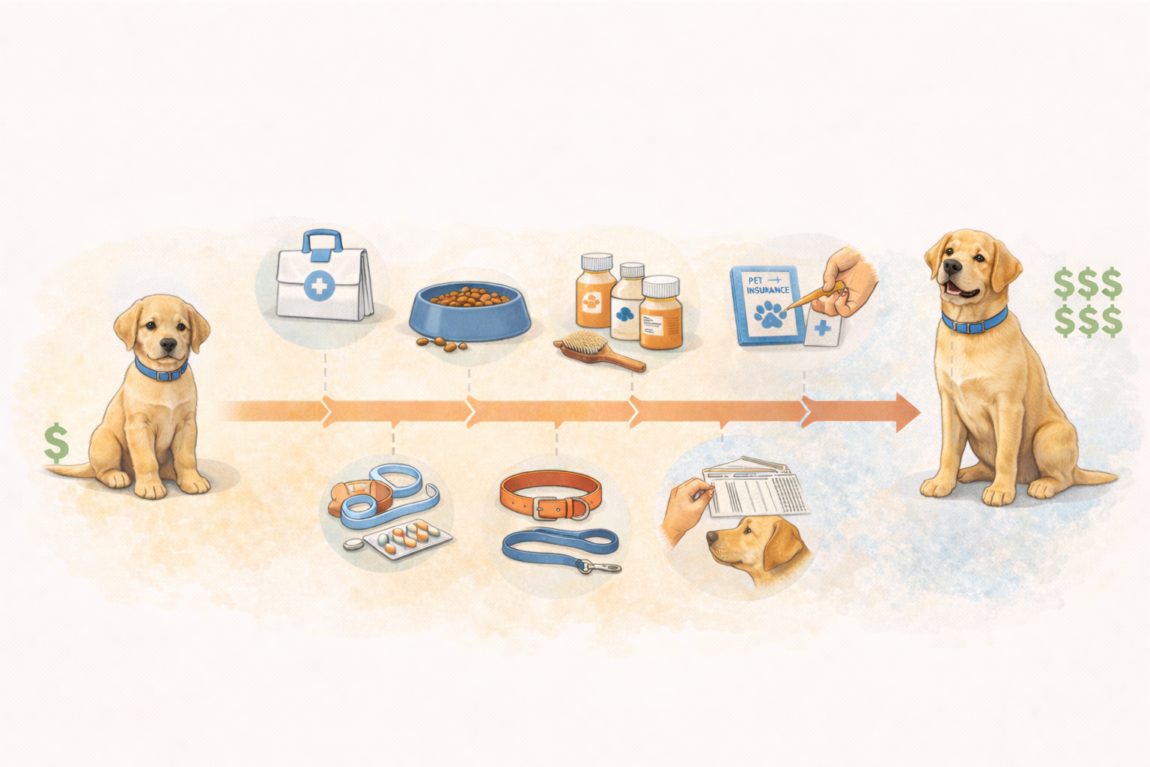
Before training methods or program prices ever come into play, there is a reality many people overlook: owning a dog capable of service work already carries significant responsibility and cost. Food, veterinary care, insurance, equipment, and early development are not “extras” — they are the baseline requirements for ethical ownership. Even buying the puppy itself can be the first large investment.
In Part 2 of our series, we break down the foundational expenses every service dog prospect requires, regardless of how they are trained. Understanding these shared costs is essential, because no training path eliminates them; and ignoring them increases risk long before training success is even possible.
We continue our series exploring the Cost, Risk, and Value in Service Dog Training. If you missed the previous parts, visit the series home page!
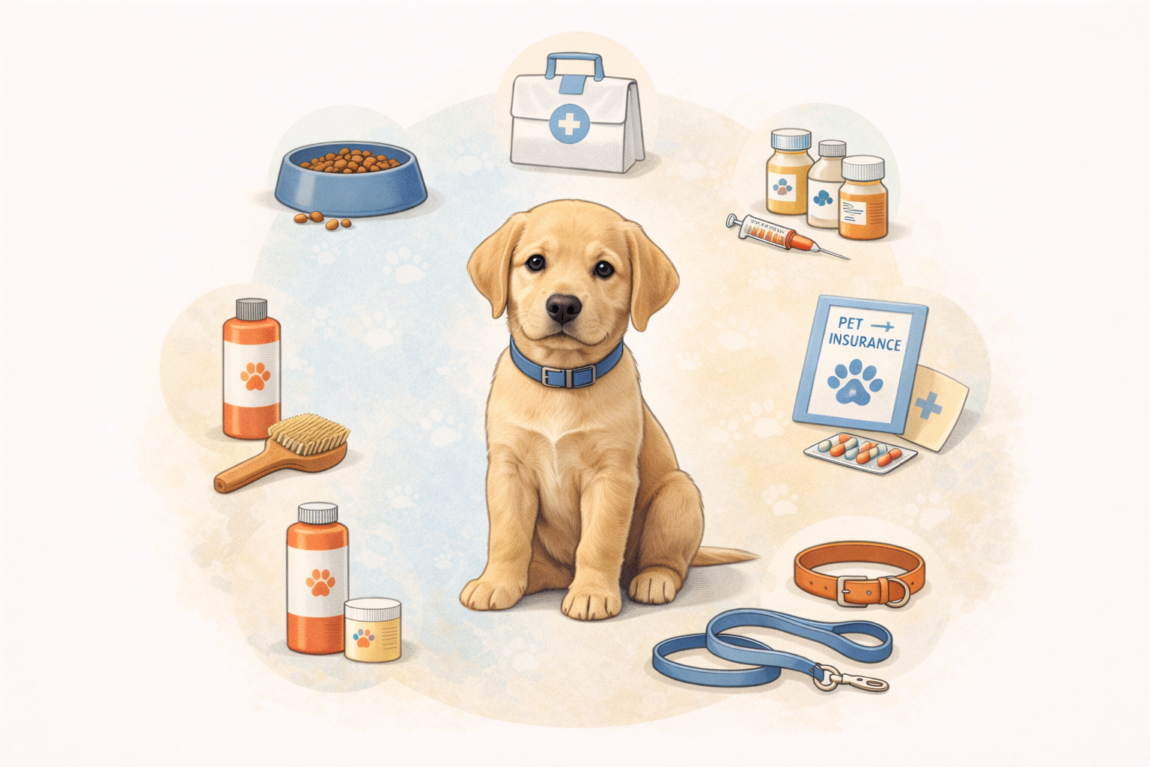
Last time we talked about costs associated with raising a service dog in-training that everyone faces – no matter the path of training they choose. This time, we discuss other expenses, some that last for the dog’s lifetime, that many fail to consider.
In Part 3 of our series, we highlight the expenses that are most often forgotten: sourcing an appropriate dog, temperament testing, puppy obedience classes, insurance, grooming, equipment replacement, and other recurring needs. These costs are rarely included in training quotes, yet they quietly determine whether a service dog team succeeds.
Part 3 – Remember These: Costs People Often Neglect to Consider (COMING SOON)
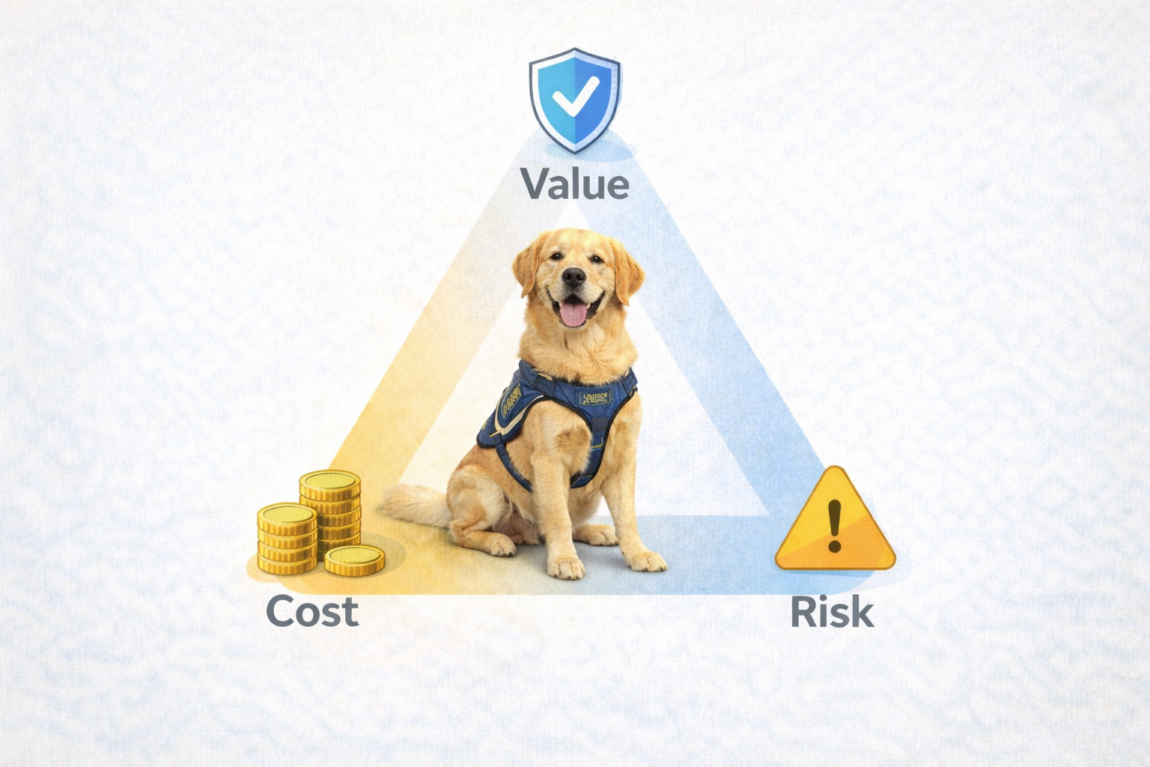
Part 4 – Service Dog Ownership: Examining Cost, Value, and Risk
We continue our series exploring the Cost, Risk, and Value in Service Dog Training. If you missed the previous parts, visit the series home page!
Last time we examined costs that people often forget to budget for when considering service dog ownership. This time, we take pause to look at costs of ownership through the lenses of Cost, Value, and Risk.
Cost is not just money spent; it is value gained and risk managed.
In Part 4 of our series, we step back and reinterpret ownership expenses through three essential lenses: cost, risk, and value. We explain how early investments protect long-term outcomes, why cutting corners increases uncertainty, and how many “savings” simply shift risk to later stages. This section reframes ownership costs as a form of risk management and value gathering.
We continue our series exploring the Cost, Risk, and Value in Service Dog Training. If you missed the previous parts, visit the series home page!
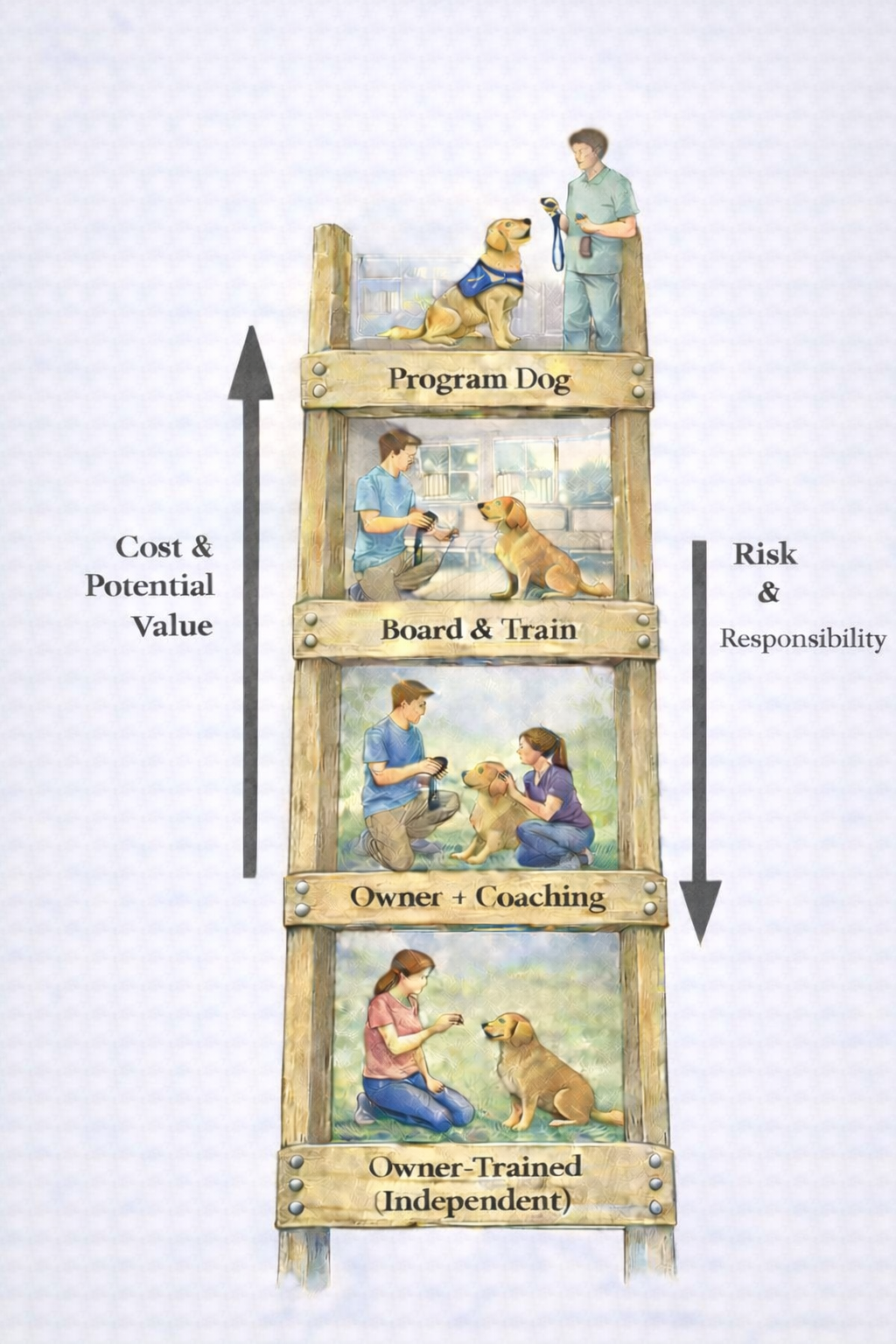
Last time we examined costs of ownership through the lenses of Cost, Value, and Risk. Now we turn to a discussion of four common routes of training a service dog.
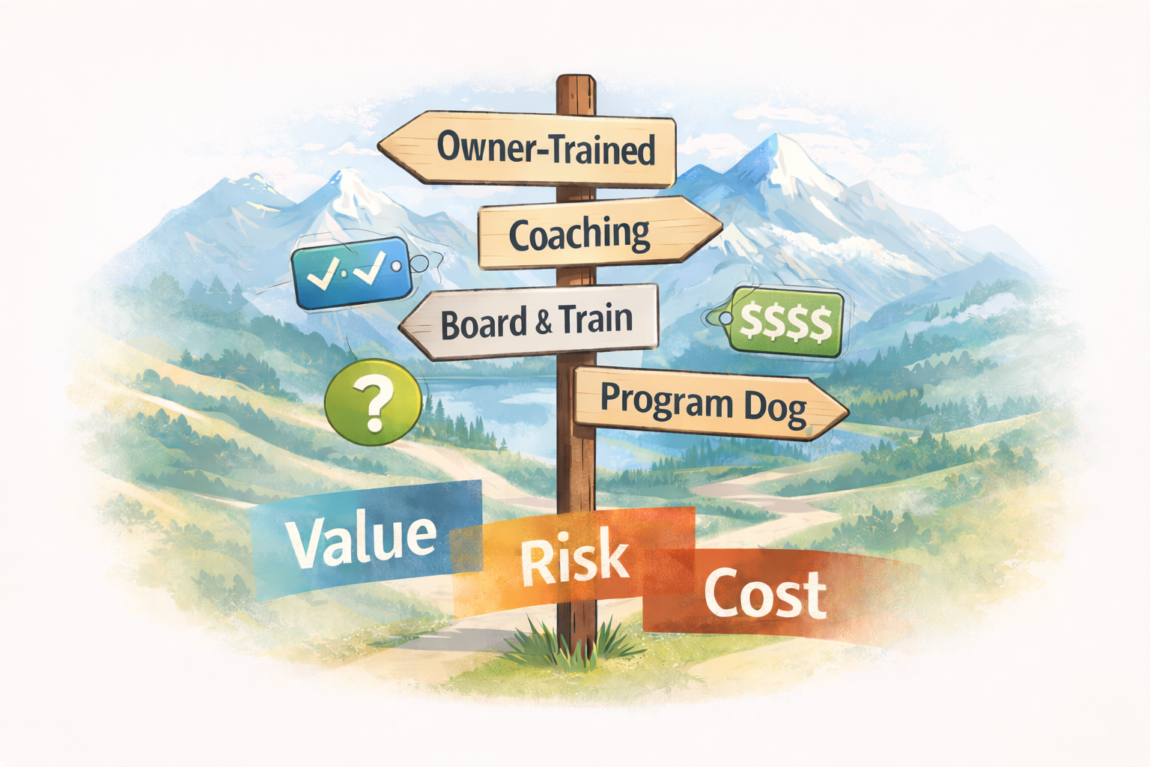
There is no single way to train a service dog, but not all paths demand the same level of responsibility, expertise, or risk tolerance. Some may be more likely to lead to better results. In Part 5 of our series, we break down the four most common training routes: independent owner training, owner training with coaching, board-and-train or co-raise programs, and trainer-raised program dogs. We explain what each path involves, who carries the burden when challenges arise, and why outcomes can differ.
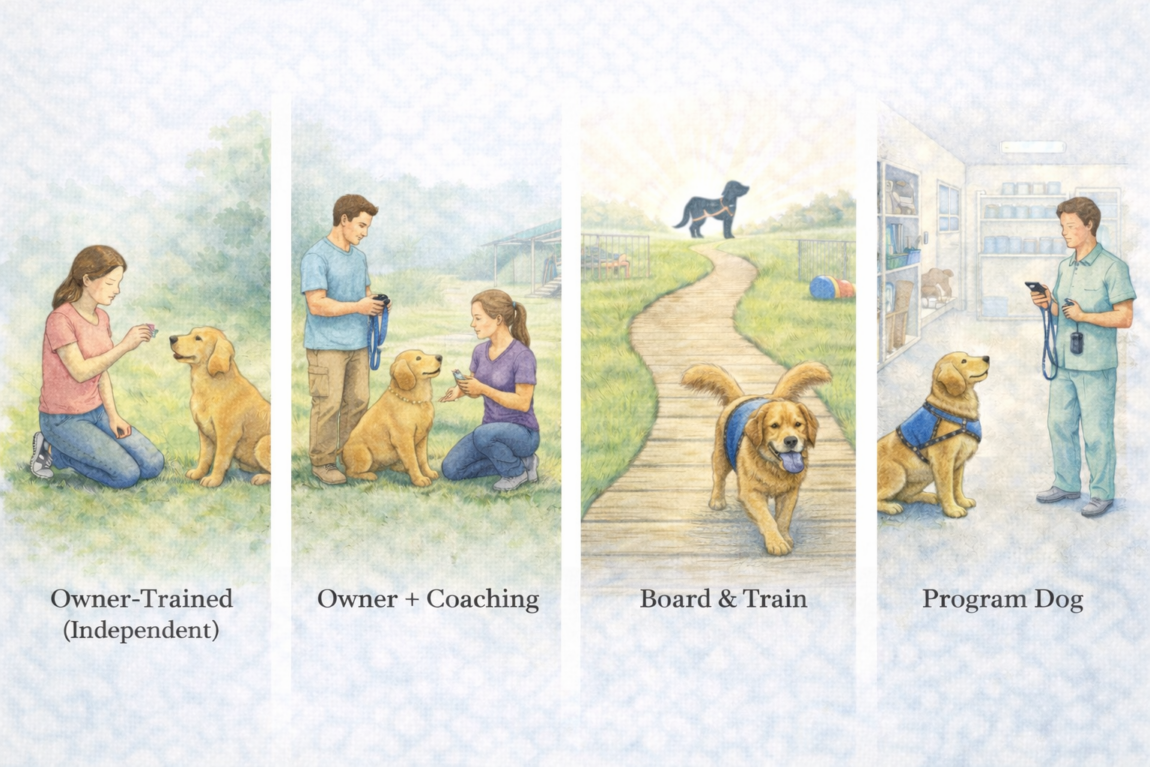
Part 5 – Training Paths Explained: Common Routes to a Service Dog
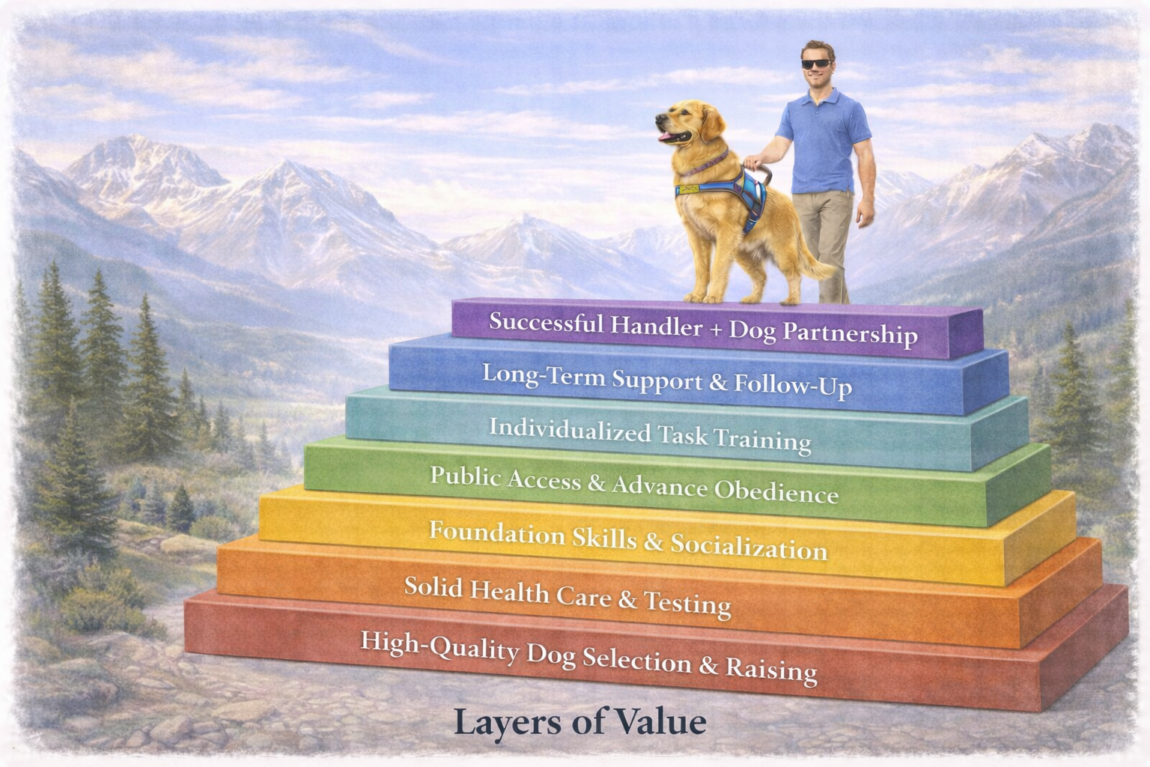
Part 6 – The Price You Really Pay: Balancing Factors in Deciding Service Dog Training Paths
We continue our series exploring the Cost, Risk, and Value in Service Dog Training. If you missed the previous parts, visit the series home page!
Last time, we focused on a discussion of four common routes of training a service dog. This time, we will compare each of these paths directly in terms of cost, risk, and value.
Why can two service dogs cost vastly different amounts? Because price reflects more than training time: it reflects where risk, responsibility, and expertise live.
In Part 6 of our series, we bring everything together to explain what people are actually paying for when they invest in different service dog options. This section demystifies pricing by showing how predictability, professional oversight, and long-term stability factor into cost.
We continue our series exploring the Cost, Risk, and Value in Service Dog Training. If you missed the previous parts, visit the series home page!
Last time, we compared different paths to train a service dog in terms of cost, risk, and value. This time we look at lifetime expenses after the dog completed the initial training and formally begins their working journey.
Graduation day for a service dog is not the end of the financial story: it’s the beginning of a long-term commitment.
In Part 7 of our series, we take a realistic 10+ year view of service dog ownership – breaking down feeding, healthcare, gear, training maintenance, enrichment, exercise, transportation, housing wear, and physical therapy. These costs are predictable, cumulative, and unavoidable. Understanding them is key to sustainable planning.

Part 7 – Lifetime Ownership Costs: The 10+-Year View
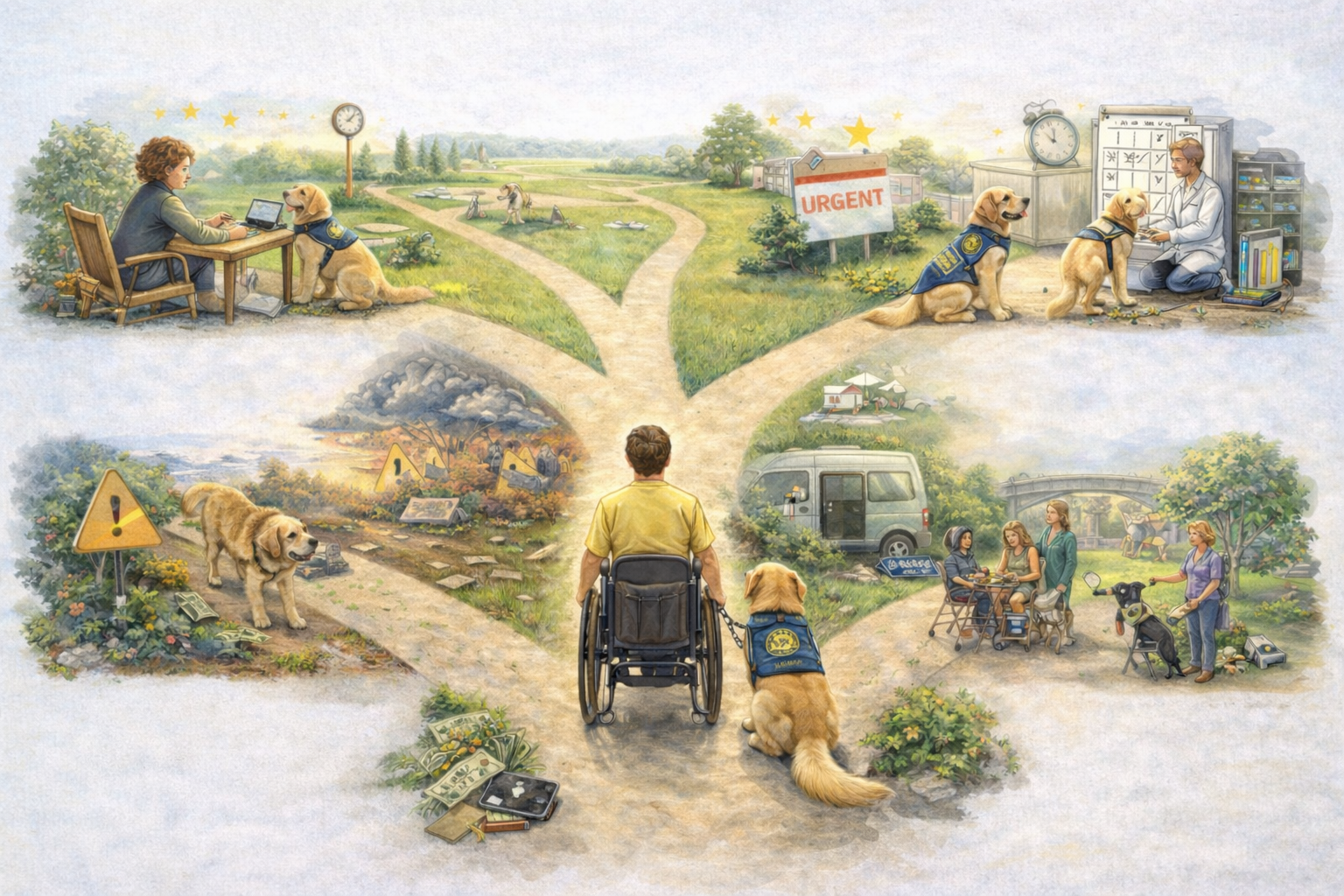
Part 8 – Choosing the Right Path: Questions to Ask Yourself
We continue our series exploring the Cost, Risk, and Value in Service Dog Training. If you missed the previous parts, visit the series home page!
Last time, we looked at lifetime expenses after the dog completed the initial training and formally begins their working journey. This time, we examine some questions that may guide people in making the choice of the right path for their journey training a service dog.
The “best” service dog path is not universal: it is personal.
In Part 8 of our series, we guide readers through the questions that matter most: time, energy, disability impact, desired level of excellence, task complexity, risk tolerance, and the role professional guidance can play. This section helps readers match expectations to reality, reducing frustration and increasing the likelihood of long-term success.
We continue our series exploring the Cost, Risk, and Value in Service Dog Training. If you missed the previous parts, visit the series home page!
Last time, we examined some questions that may guide people in making the choice of the right path for their journey training a service dog. This time we look at some ethics and transparency considerations about service dog training.
Ethical service dog work requires honesty about limitations and acknowledgement of bias in marketing.
In Part 9 of our series, we address what responsible programs won’t promise, why guarantees are red flags, the existence of scams in the industry, and why price alone is not proof of quality. We also discuss how to research organizations responsibly – beyond testimonials – seeking transparency, asking questions, and engaging directly.
Part 9 – Importance of Ethics and Notes on Transparency

Part 10 – Conclusion: There Is No “Cheap” Way to Do This Well
We continue our series exploring the Cost, Risk, and Value in Service Dog Training. If you missed the previous parts, visit the series home page!
Last time, we looked at some ethics and transparency considerations about service dog training. Now, as we conclude the series, we focus on key takeaways from the series.
Service dogs are not simple investments. They are incredibly valuable, but require careful considerations to increase odds of long-term excellence and reliability.
In Part 10 of our series, we bring it together and reinforce a central truth: doing this responsibly costs more than people expect and comes with risks, but it is worth the in value. Informed decisions protect both handlers and dogs and help unleash their best lives.
We sincerely hope you enjoyed this series and that it helped you understand why valuable service dogs can come with a high cost, and why mitigating risks are also an important consideration. As you embark or continue your journey into service dog training, we are here to help you!




Join Us in our Service Dog Training and Support Facebook Community.

Whether or not you are one of of past clients, network with other service dog handlers to find support, guidance, and resources to help you on your journey. Become a part of an awesome, positive community!

Follow the Unleashed Blog.

Read on testimonials of service dog handlers, learn about our podcast episodes, access mental health support and animal assisted therapy resources, and gain information about training of service dogs, therapy dogs, and emotional support dogs.