




“The Price of Just Dog Ownership“
Before Anyone Says Training
COST, RISK, AND VALUE IN SERVICE DOG TRAINING SERIES
Part 2 – Baseline: Costs of Anyone Raising a Dog for Service Work
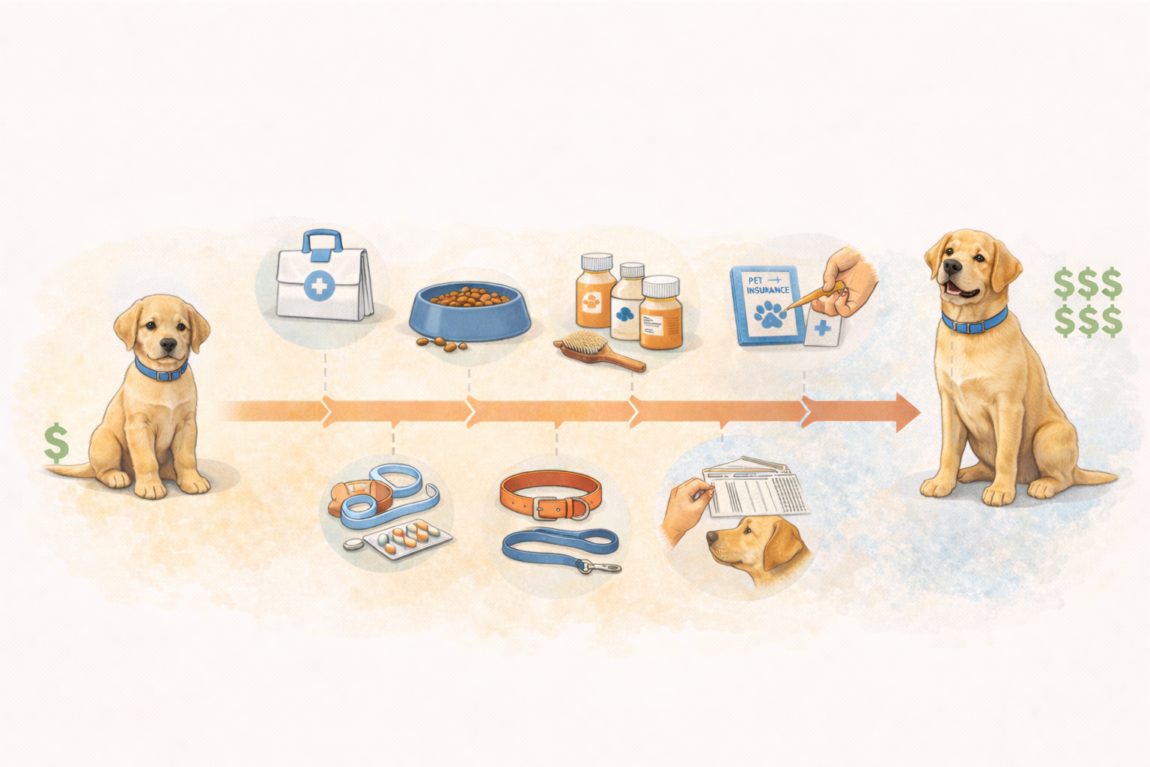
Regardless of how a service dog is ultimately trained, every successful service dog begins the same way: as a dog who must be responsibly chosen, raised, cared for, and supported through critical developmental stages. These baseline costs exist whether a dog is owner-trained or trained with professional assistance. Training choices add to this foundation, but they do not replace it.
One of the most common misunderstandings about service dog pricing is the assumption that training is the primary expense. In reality, some of the most significant and frequently underestimated costs occur before training even begins. The cost of ownership during the first year to year and a half of a dog’s life often represents a substantial financial investment on its own. This period includes not only routine care, but also the time when health screening, socialization, and early development play a critical role in determining whether a dog can safely and reliably perform service work.

- Acquiring a Service Dog Prospect is the first consideration. It is possible to train amazing service dogs when sourced from a variety of places. Nevertheless, securing a good prospect is the best way to start the journey right. Ethical service dog prospects are typically sourced from reputable breeders or programs that prioritize health, temperament, and early development. Dogs from these sources often cost several thousand dollars, commonly ranging from approximately $3,500 to $5,000. That price reflects extensive behind-the-scenes investment, including health testing and genetic screening of breeding dogs, structured early socialization and acclimation protocols, appropriate early veterinary care, deworming, and initial vaccinations. These practices are designed to reduce the risk of medical or behavioral issues that could end a service dog’s career prematurely.
- Nutrition and daily care form the most visible portion of this baseline. Quality food appropriate for growth and long-term health, supplements when recommended, and basic care supplies are ongoing necessities. Cutting corners in this area may reduce short-term expenses, but it can increase the likelihood of health issues that jeopardize a dog’s ability to work later.

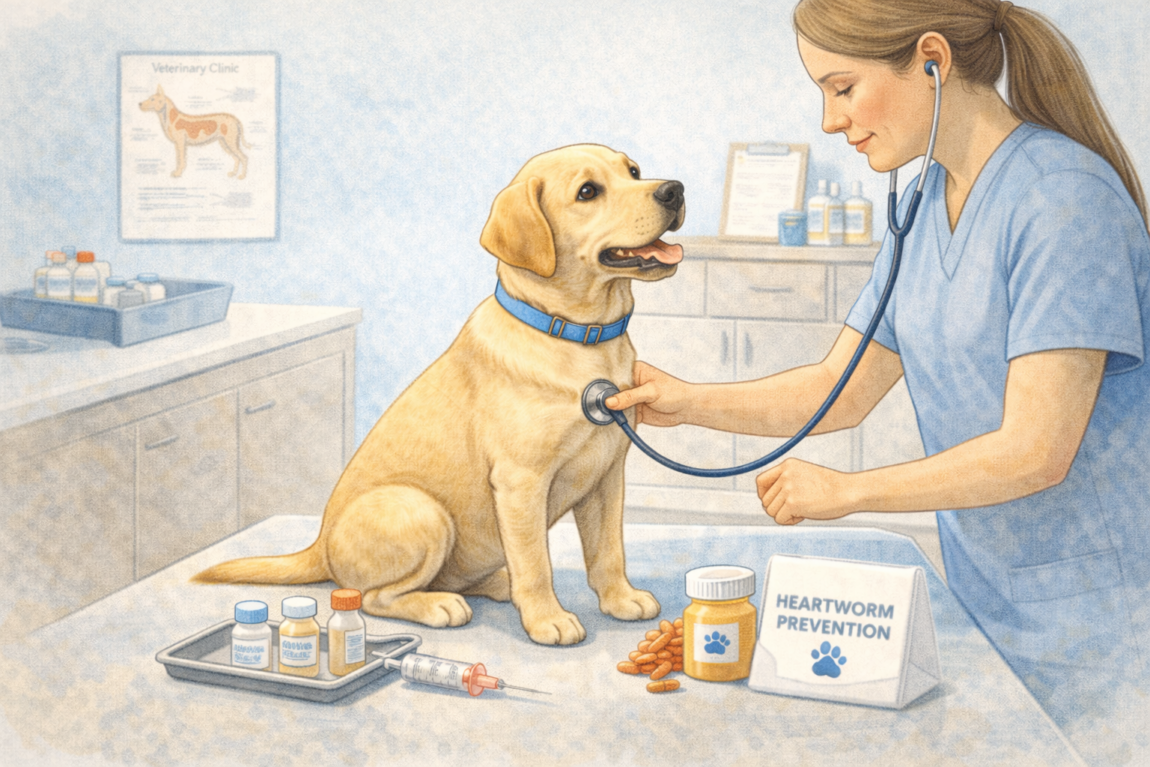
- Veterinary care is another unavoidable component. Puppies and young dogs require routine examinations, vaccinations, parasite prevention, spay or neuter procedures where appropriate, and ongoing wellness care as they mature. For dogs being considered for service work, many handlers and programs also pursue additional health screening to reduce the risk of orthopedic or genetic conditions that could end a working career early.
- Early development and exposure also carry real costs. Proper socialization involves structured exposure to environments, surfaces, sounds, people, and other animals. This often requires travel, equipment, and intentional planning. This phase lays the groundwork for public access reliability later and is not optional for dogs expected to work safely in public spaces.

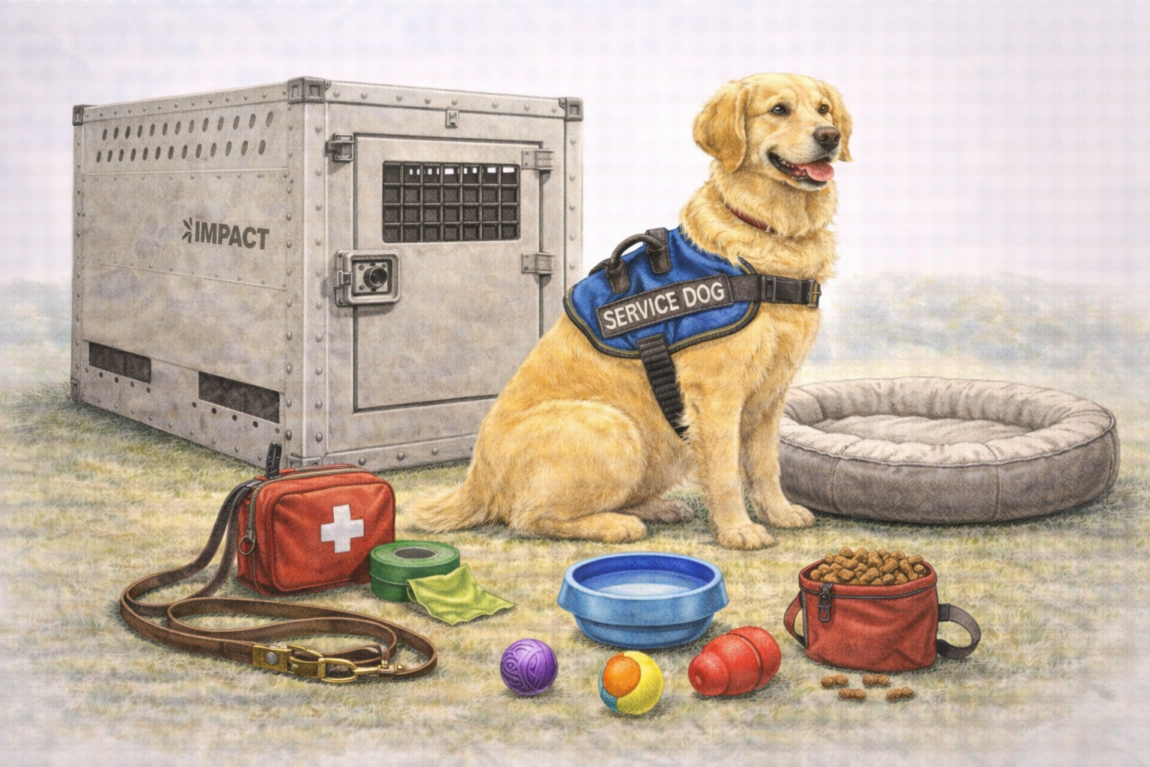
- Equipment and working gear are another baseline expense that applies even during training. Service dogs-in-training require appropriate collars, harnesses, leashes, long lines, crates, beds, enrichment tools, identification gear, and eventually task-appropriate equipment as their training progresses. As dogs grow, many of these items must be replaced or resized, adding to the overall cost. In addition to everyday gear, handlers often invest in training-related equipment such as treat pouches, food rewards, engagement tools, and environmental aids that support learning and safe management in public. While individual trainers may supply some specialized tools, the responsibility for basic working gear usually falls on the owner or program. These costs are a normal and necessary part of preparing a dog for reliable service work, regardless of who provides the training.
These baseline expenses are not optional upgrades; they are the minimum requirements for responsibly raising a dog with the potential for service work. When these costs are underestimated or ignored, the risk of washout, burnout, or health-related failure increases significantly.
Before we discuss some estimate numbers, a few additional considerations are important:
- These estimates are based on data collected between 2023-2025 in Colorado. Costs may vary substantially based on location and do change over time.
- Estimates reflect costs associated with the first 21 months of service dog ownership and are applicable to any training path chosen.
- As we discuss in later parts, this is not a fully inclusive budget and it does not include any costs associated with hiring professional help for service dog training.
- Costs may vary substantially depending on factors such as breed, location, time, and how much support from a professional is included.
- Owners should think of these estimates as the lower end of possible costs associated with these categories. Basically, these are costs “starting at…”
With that said, here are some estimated costs for some of the items discussed above:
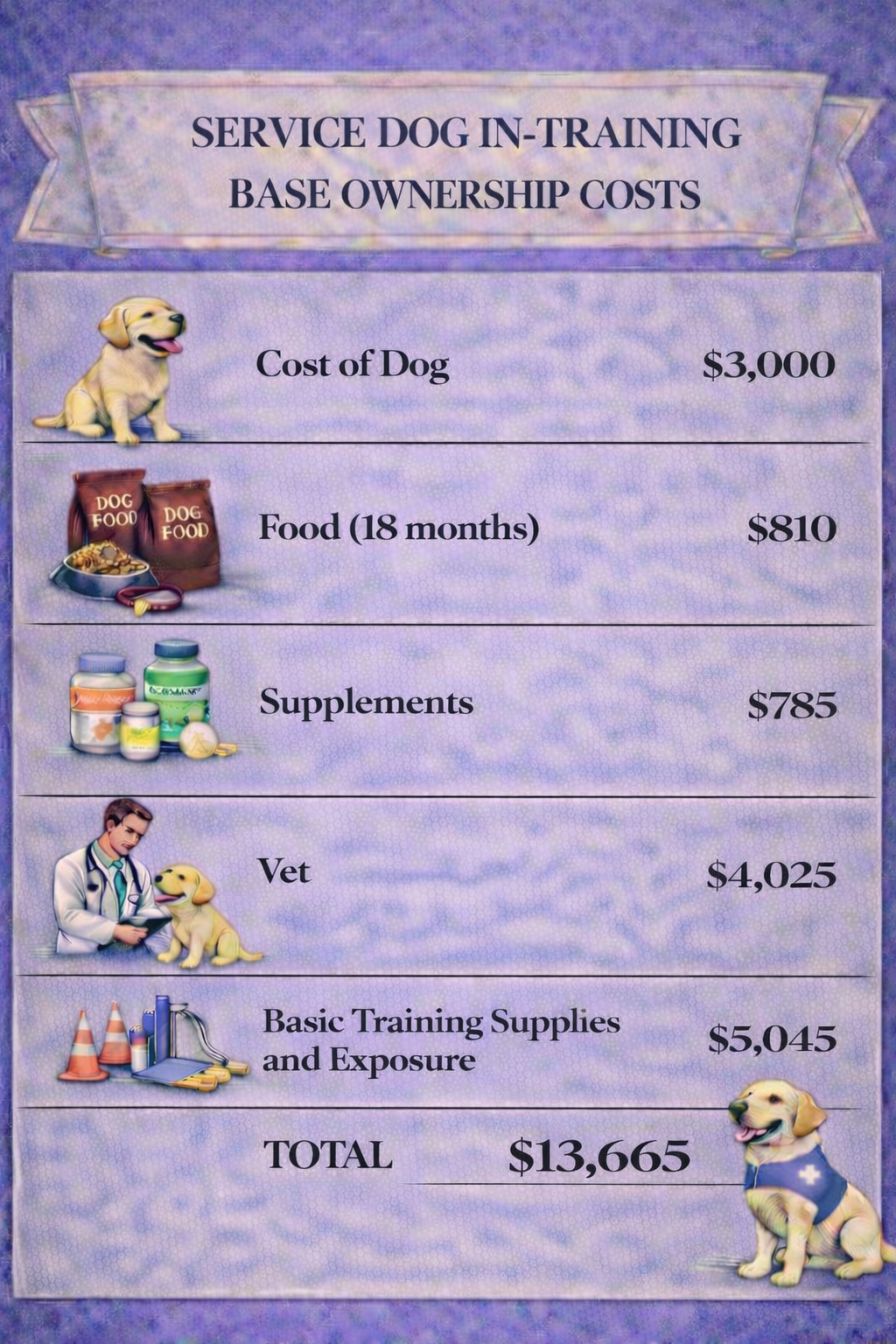
Note that while estimates above account for about 21 months, many service dogs training periods extend to 24 months or longer.
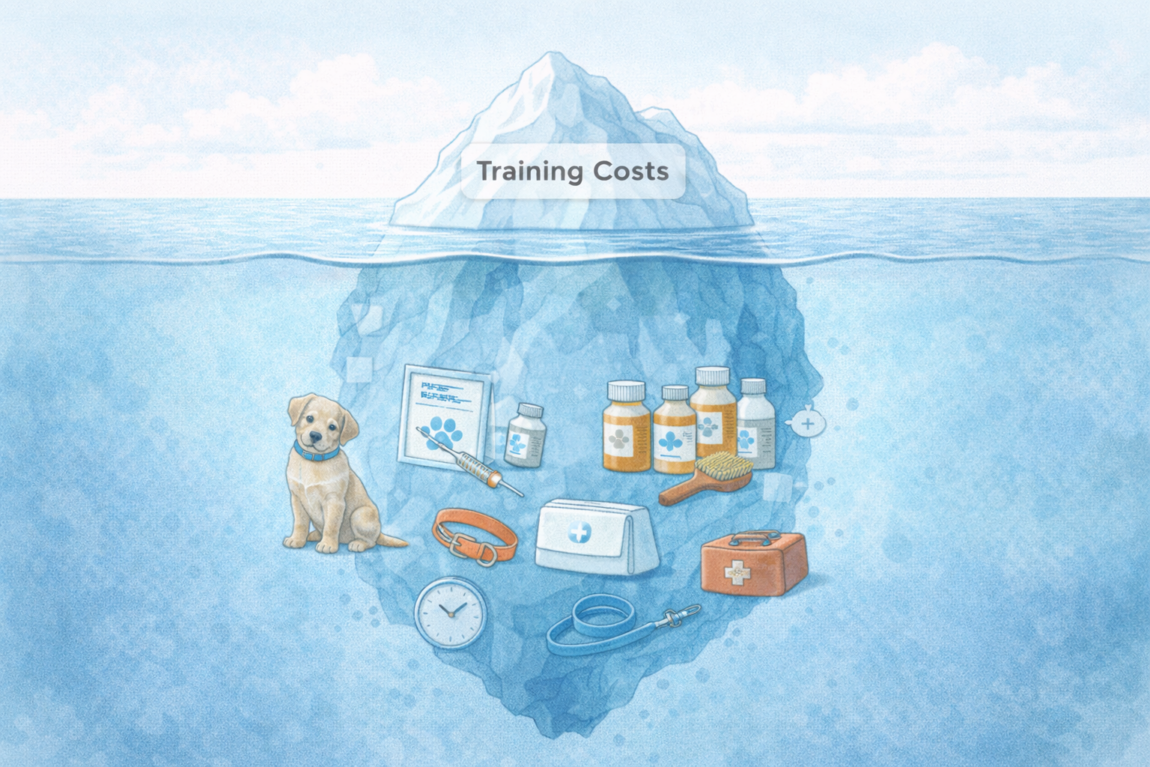
Understanding these shared costs provides an essential reference point. Once the baseline is clear, it becomes easier to evaluate how different training paths change not only the price, but also the distribution of time, expertise, and risk.
In the next section, we will look at expenses that are commonly left out of initial budgets, including costs that continue to affect service dog teams long after the early training period has begun.
If you missed previous part of the series, catch it here: Part 1 – Setting The Scene: Reasons Why Service Dog Costs Are So Hard to Compare
Find the series home page with links to all published parts here.




Join Us in our Service Dog Training and Support Facebook Community.

Whether or not you are one of of past clients, network with other service dog handlers to find support, guidance, and resources to help you on your journey. Become a part of an awesome, positive community!

Follow the Unleashed Blog.

Read on testimonials of service dog handlers, learn about our podcast episodes, access mental health support and animal assisted therapy resources, and gain information about training of service dogs, therapy dogs, and emotional support dogs.