




Service Dog Training
Costs Borne and Risks Taken When Searching for Value
COST, RISK, AND VALUE IN SERVICE DOG TRAINING SERIES

Series Overview
“How much does a service dog cost?” is one of the most common questions people ask; and one of the hardest to answer honestly. Online, you’ll see numbers ranging from “surprisingly affordable” to tens of thousands of dollars. The problem isn’t necessarily that people are dishonest: it is that they’re often talking about completely different things.
The true cost of a service dog is not just a price tag. It is the cumulative result of ownership responsibilities, training structure, professional expertise, long-term care, and how much risk is carried by the handler versus professionals. Understanding that distinction is essential for making informed, ethical decisions.
Speaking of ethics, before going further, it is important to be explicit about the intent of this series. My Life Unleashed is a business that provides professional services for service dog training, including:
- Assistance with service dog prospect procurement and evaluations
- Service dog training consultation and evaluation services
- Coaching support through individualized lessons (in person or virtual)
- Board-and-train or co-raise programs
- Trainer-raised program dogs
- Service dog training seminars for trainers and handlers

However, this series is not written to justify our pricing or to persuade readers to choose a particular training path. It is written for the general public and for anyone considering a service dog. We hope this helps you whether or not you ultimately decide to work with us, another trainer, a different program, or pursue owner training independently.
Our commitment throughout this series is transparency. Service dogs represent a major financial, emotional, and logistical commitment, and people deserve clear, honest information before deciding whether and how to pursue one. We believe ethical practice in this field requires acknowledging the real costs involved, the variability between training paths, and the responsibilities placed on handlers, trainers, and programs alike.
Now… onto the good stuff…
The Baseline Cost That Everyone Training a Service Dog Shares
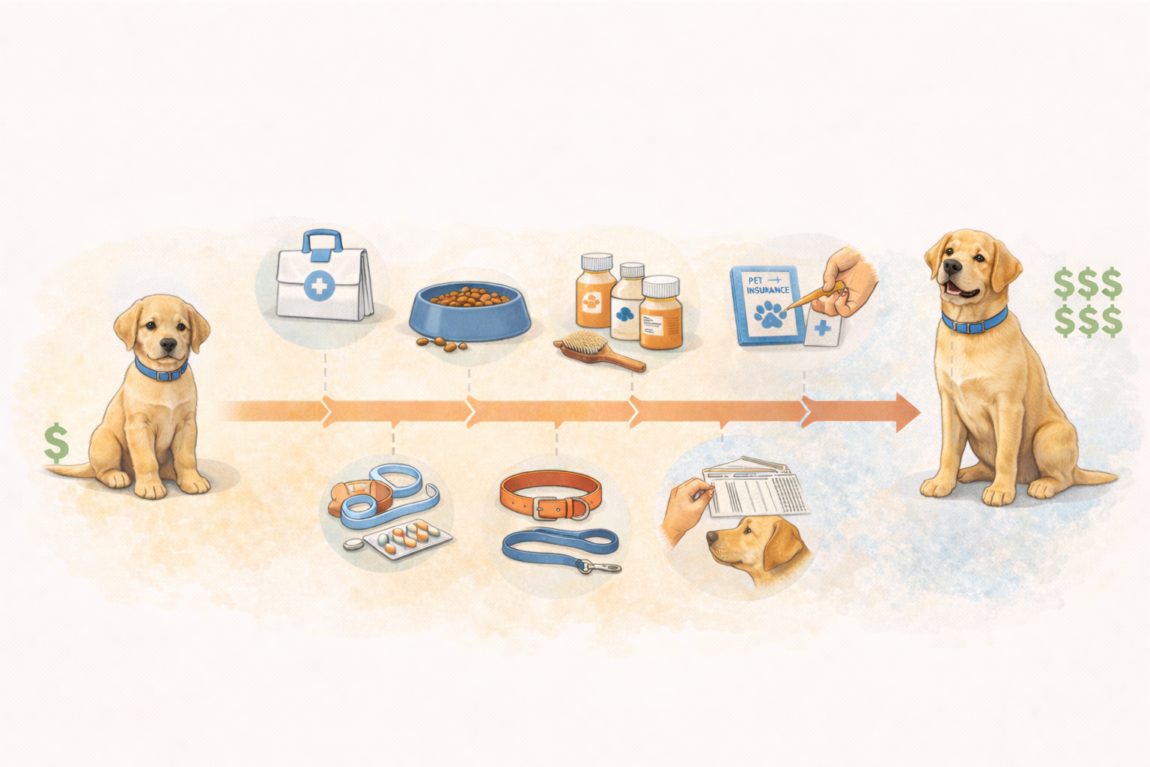
Before training even enters the conversation, owning a dog capable of service work already comes with significant responsibility and expense. Food, routine veterinary care, insurance, equipment, grooming, and basic supplies are not optional. These costs apply regardless of whether a dog is owner-trained or trained trained with professional assistance.
Early development matters as well. Ethical service dog prospects are typically sourced from reputable breeders or programs that prioritize health testing, temperament, and early socialization. Acquiring a suitable candidate alone can cost several thousand dollars, reflecting genetic screening, early care, vaccinations, and structured exposure. Many teams also invest in professional temperament evaluations to reduce the risk of training a dog who is unlikely to succeed.
These are not “luxury upgrades.” They are foundational investments that increase the likelihood of long-term success.
The Costs People Forget
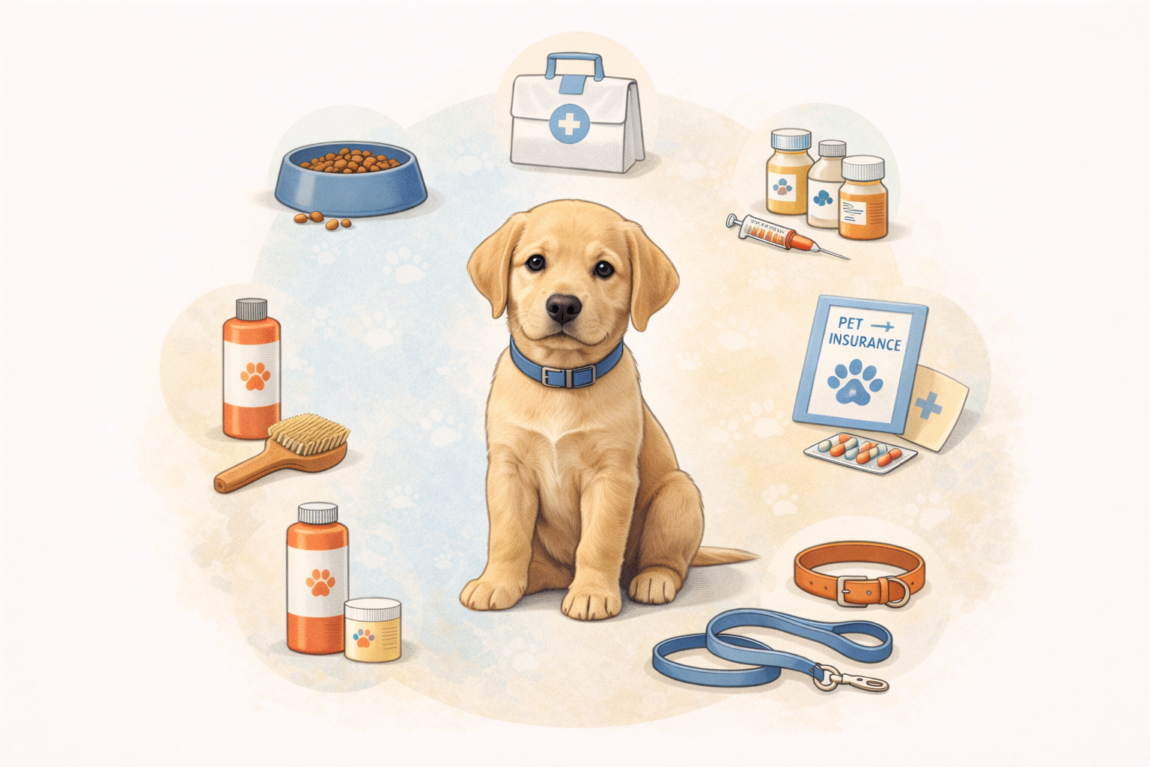
Many service dog owners forget to factor in additional, but important costs. Early puppy obedience classes, insurance, grooming, replacement equipment, and emergency care are often omitted from budgets because they don’t look like “training costs.”
Over time, these expenses add up; and ignoring them increases risk later.
Ownership costs function less like a one-time purchase and more like ongoing risk management.
Skipping early investments doesn’t eliminate cost; it usually delays it until the consequences are more severe.
Training Paths
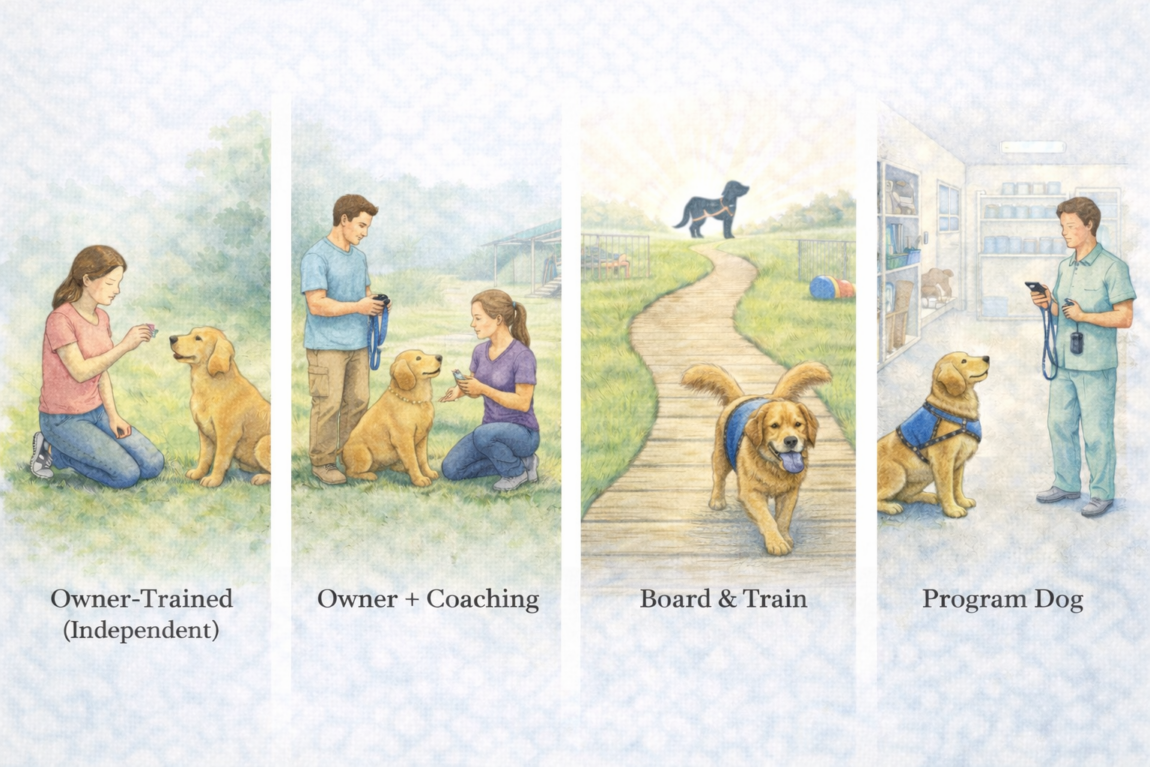
There is no single way to train a service dog. The most common paths include independent owner training, owner training with professional coaching, board-and-train or co-raise programs, and trainer-raised program dogs. Each route can produce capable service dogs, but they distribute responsibility, expertise, and risk very differently. They may also come with different added value.
Owner training often has the lowest direct training fees, but it places nearly all responsibility on the handler. Success depends heavily on the handler’s experience, time, and ability to recognize gaps they may not yet know exist. Mistakes made early can be difficult or costly to correct later. However, the process can be incredibly rewarding and successful.
Coaching models add professional guidance, helping handlers apply skills correctly, troubleshoot earlier, and identify appropriate tasks. While increasing cost, these programs often improve training quality and efficiency while keeping the handler actively involved.
Board-and-train or co-raise programs shift more labor to professionals, offering intensive daily training by experts. They tend to cost more and require careful transition back to the handler, but they can accelerate progress for specific stages of training.
Trainer-raised program dogs represent the highest upfront cost, but also the greatest predictability. Dogs are raised and trained by professionals over extended periods, often living in an expert’s home environment. Program dog plans absorb significant risk related to candidate selection, washouts, health issues, and training setbacks. They also can include health testing, spay/neuter, transition training, and ongoing support.
No path is inherently “better.” The right path is the one that aligns with a handler’s needs, capacity, timeline, and tolerance for uncertainty.
Cost, Risk, and Value
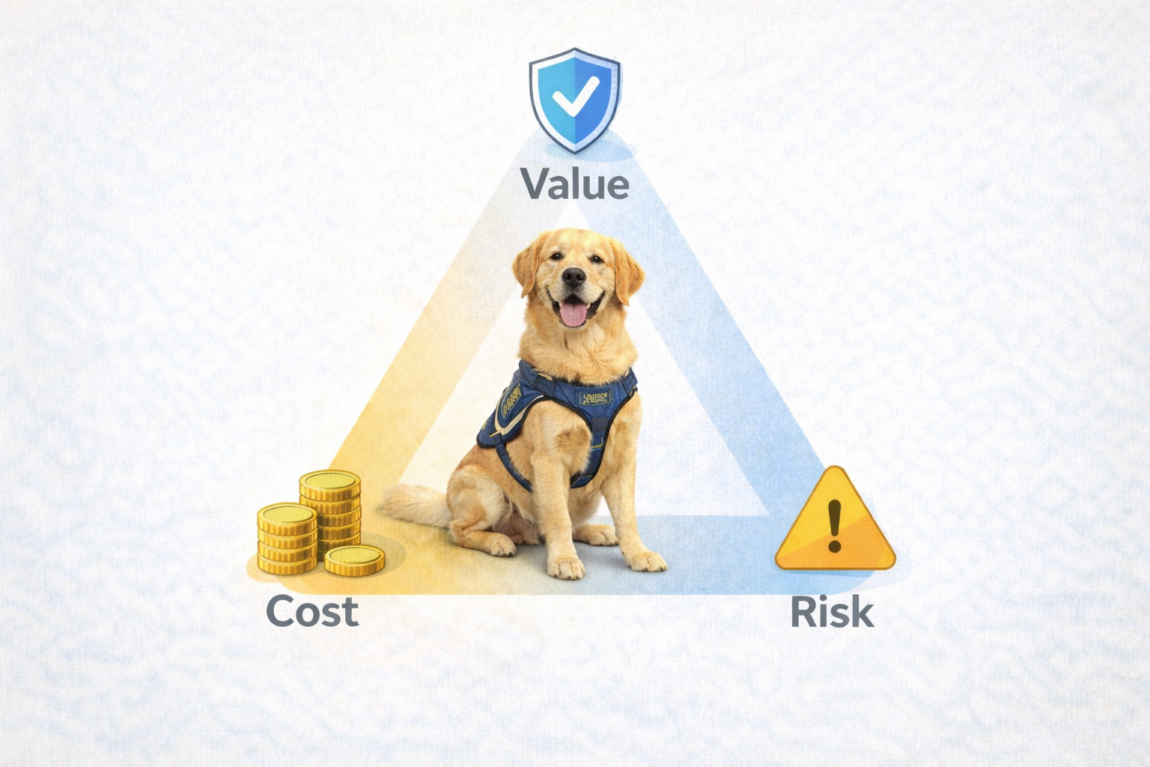
Price alone does not explain service dog costs.
Value comes from training quality, consistency, and durability.
Risk reflects who bears the consequences if things go wrong.
Lower upfront cost often means higher personal risk.
Higher upfront cost often reflects risk being managed or absorbed by professionals. Understanding this tradeoff helps explain why prices vary so widely and why “cheap” options can become expensive over time.
Lifetime Ownership: The 10+ Year View
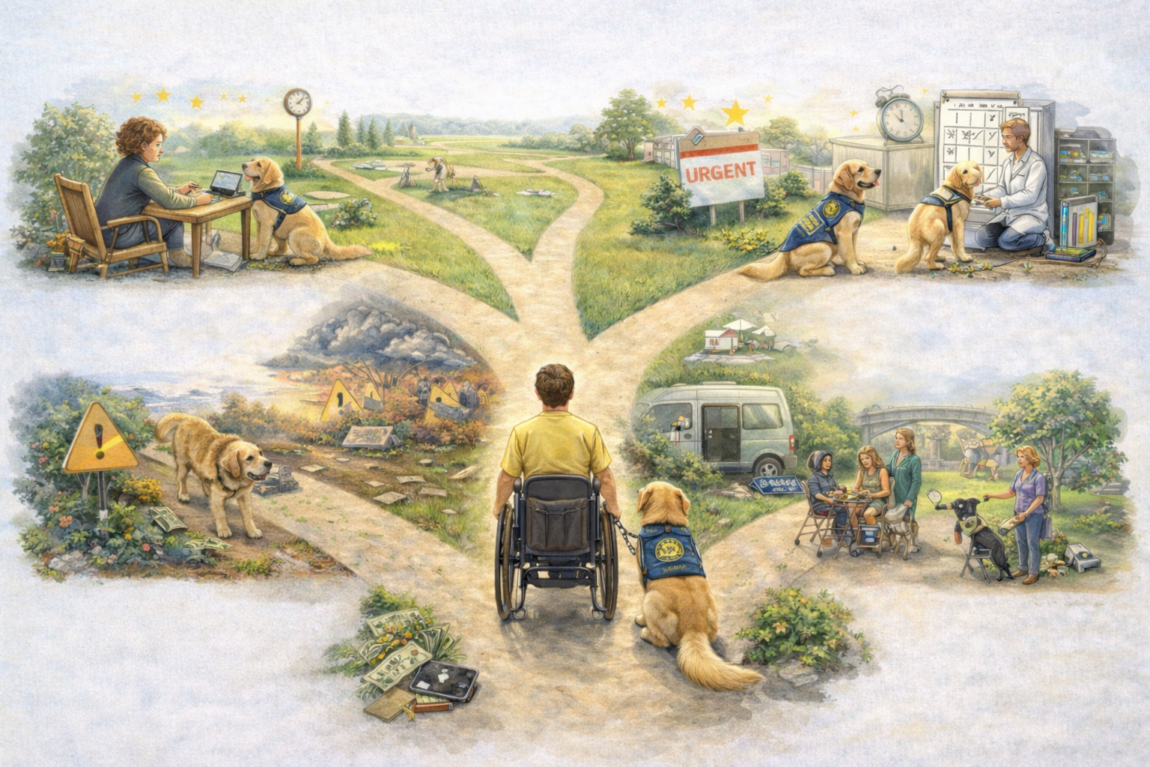
Training is only the beginning. Over a service dog’s working life, handlers must plan for feeding, healthcare, supplements, grooming, gear purchase and replacement, ongoing training, enrichment, exercise, transportation needs, housing wear, and sometimes even physical therapy.
Individually, these costs may seem manageable.
Collectively, they represent a long-term commitment that must be planned for realistically. Service dogs are not one-time purchases; they are sustained partnerships.
Choosing the Right Path

There is no universal “best” option.
The most responsible choice depends on time, energy, disability impact, desired level of excellence, task complexity, and how much professional guidance is needed.
Some handlers require highly complex task work or support for multiple disabilities. Others need extreme reliability across environments.
Higher expectations generally require more training time, expertise, and investment. Professional trainers can play a critical role not only in training skills, but in helping handlers identify which tasks will be most useful—something many people don’t yet know when they begin.
Transparency and Ethical Reality Checks

No ethical program can guarantee outcomes.
Scams exist, and price alone is not proof of quality. Responsible selection of programs and trainers requires more than reading testimonials. It involves asking the hard questions, and seeking transparency. Speaking directly with organizations to ask pointed questions is a good place to start. You can learn a lot about programs from the expertise shown during intake. Social media and reviews can also be a great place to find testimonials.
It’s also important to acknowledge bias. Organizations that provide service dog training, including ours, have a vested interest in this field. While education and transparency are the goal, readers should always consider context and engage critically with any information found online. Open discussion and accountability are essential, as is client investment of effort and time to vet options.
The Bottom Line

There is no cheap way to do this well. But there is an informed way.
We will discuss this throughout this series.
A service dog is an investment in excellence, reliability, and long-term value.
When decisions are made with realistic expectations, ethical standards, and thoughtful planning, both handlers and dogs are protected. That, not the lowest price, is what true value looks like.
Unleashing a better life with a well trained service dog is within the grasp of those that consider costs and risks carefully.
The value can be yours.
Stick with us as we take a deeper dive into these topics over the next few weeks! In the first part, we will discuss reasons why service dog costs are hard to compare.
See you there: Part 1 – Setting The Scene: Reasons Why Service Dog Costs Are So Hard to Compare
Find the series home page with links to all published parts here.




Join Us in our Service Dog Training and Support Facebook Community.

Whether or not you are one of of past clients, network with other service dog handlers to find support, guidance, and resources to help you on your journey. Become a part of an awesome, positive community!

Follow the Unleashed Blog.

Read on testimonials of service dog handlers, learn about our podcast episodes, access mental health support and animal assisted therapy resources, and gain information about training of service dogs, therapy dogs, and emotional support dogs.